It's that time of the year again when Kerb sends out another call for submissions. Overseen once more by an editorial staff of students at the RMIT University School of Architecture and Design in Melbourne, this year's theme is Speculative Stories: Narratives in Landscape Architecture.
Speculative narrative and the potential of imagination are important factors in creative production. It is considered that a multitude of small stories are the “quintessential form of imaginative invention”.
Speculation through narrative offers an apparatus through which we may investigate the concept of ‘reality’. Immersed within our current understandings, speculation is influenced by our contemporary condition. In these fictional dispositions, the variables and constraints of ‘reality’ can be controlled, omitted completely or utilized as key motives for the foundations of new territories.
Speculative Narrative can be an exploration of idealistic scenarios, the fossilization of information, or the creation of fantastical realms.
This allows the model of design to move beyond problem solving, crisis management and project liberation from the constraints of our existence. The augmentation through speculative narrative enables the reshaping of current processes, understandings and disciplines.
Speculative Narrative makes it possible to redefine ‘present’ and ‘future’.
This frequently posed question targets fundamental principles of design, those basic criteria and priorities through which disciplinary stability is ensured. Yet, insofar as relevance is a core value of architecture, in both theory and practice, the contingent nature of the future guarantees that some forms of knowledge not presently considered essential will eventually become indispensable.
306090 15 is thus calling for “contributions that envision possible futures for architecture through speculations about new disciplinary knowledge. What specific methods, materials, or understandings—tools, ratios, formulas, properties, principles, guidelines, definitions, rules, practices, techniques, reference points, histories, and more—not presently considered essential to architecture could, or should, define its future? Pertinent knowledge might be previously forgotten, currently undervalued, generally misunderstood, or not yet recognized. Architects have long looked both to the outmoded traditions of their discipline and to other fields altogether when imagining possible directions for their work. In blurring the boundary between essential and non-essential knowledge, this inquiry seeks not to codify the contemporary state of the art for architecture, nor to assert the value of multidisciplinarity, but to envision, and potentially catalyze, new disciplinary approaches.”
This edition, then, will not be about the state of the art; instead, it's about what the state of the art could be, should be, would be, if...
In case you need reminding, Bracket 3 is looking for critical articles and unpublished design projects that explore “architecture, infrastructure and technology [operating] in conditions of imbalance, negotiate tipping points and test limit states. In such conditions, the status quo is no longer possible; systems must extend performance and accommodate unpredictability. As new protocols emerge, new opportunities present themselves. Bracket [at Extremes] seeks innovative contributions interrogating extreme processes (technologies, operations) and extreme contexts (cultural, climatic). What is the breaking point of architecture at extremes?”
The deadline is 20 February 2012.
Also be on the lookout for Bracket [goes soft], scheduled to be available this month from Actar. Some of the projects in this second almanac sound like they also belong in the new one.
The latest edition of Kerb is out now. Compiled and edited by students at the RMIT University of Architecture of Design, Kerb 19 is jam packed with “useful guides for navigating new post-evolutionary territories of design.”
They include cybernetic fireflies, bioluminescent billboards, genetically engineered sound gardens, digital herbariums, oyster farms, mycorhrizal extrastructures, rubblescapes, jellyfish houses and bacillithic erg-cathedrals.
These and and many others are “unified by an insistent desire to establish new, considered interrelationships with the natural world. This edition hopes to inspire design practice which works towards a methodology of porosity, integrity of intent, spontaneity and responsiveness. We are accountable for fashioning modes of production founded on acceptance of our role and place within the grander scale of things.”
Kerb 19 is seeking submissions which explore the theme Paradigms of Nature: Post Natural Futures.
The brief:
Are we steering in an 'un-natural' direction, or taking the evolutionary leap necessary to establish a more integrated mode of co-existence?
We are entering a period of extreme technological escalation, where we can now synthesise technologies with living systems. It may soon be possible to create self-generating, manufactured landscapes that have the ability to grow, repair, decay and multiply, responding to a multitude of forces.
How will the development of these bio-technological possibilities shape the way we create landscapes where the city environment could transform into a dynamic, interactive organism of limitless potential?
In what ways will the urban landscape adapt and change with these neo-natural realities, where it becomes increasingly difficult to draw tangible lines between what we preserve as ‘natural’ and ‘artificial’?
But will all this current wild speculation about a future predicting synthetic biological ecologies, trans-natural robotic systems and post-natural organisms ever be realised, and how useful is it in meeting our collective ideals?
Mitchell Whitelaw, of The Teeming Void, alerted us that Kerb 17 is now available or at least will be soon. Last Friday was its launch party. We checked Amazon, and it doesn't seem to be listed, though copies of two previous editions are still available for purchase: Kerb 15 - Landscape Urbanism and Kerb 16 - Future Cities.
Compiled and edited each year by landscape architecture students at RMIT, the latest issue tackles the question, Is landscape architecture dead?
kerb 17 critiques current modes of thinking about the practice of landscape architecture, offering up a discussion of where landscape architecture is, what it has evolved from, and what it might become in the future. The collection of works and ideas by international and Australian designers and artists featured in kerb 17 respond and demonstrate how through the medium of landscape and a potential mediation of design disciplines we can reconsider contemporary ideas of landscape.
Except for Whitelaw's article, the content remains a mystery to us. We can thus only speculate what's on offer inside from the riotously wacky cover.
Are we to expect a repudiation of hyper-modern designery and a celebration of the informal?
Is there a call away from the Dutch School of slick sustainability and cosmetic urban regeneration towards the messier logistics of radical sustainability?
Is someone making the case for post-nature as a legitimate site not just of landscape inquiry but of landscape design?
Last month we alerted readers that kerb was looking for article submissions for their 17th issue: Death of Landscape. The deadline has past, but there is still a way for you to contribute. The editorial team wants some images.
Does Landscape Architecture have the capacity to deal with the potentials of the future?
What is the future of Landscape Architecture?
How can landscape be shaped by concepts/models/ideas/theories that are not normally considered relevant to Landscape?
Show them its rotting corpse in the overgrown lawns of Foreclosure, Florida or its perfumed diseased body getting further irradiated by a Middle Eastern sun. Perhaps you have evidence that it's actually flourishing in the toxic landscape of the Pontine Marshes and in the PleistocenePark?
Whatever you've got, keep in mind that the due date is 17 October 2008.
Editors at kerb, the annual landscape architecture journal compiled by undergraduates at the Landscape Architecture program @ RMIT, are calling for submissions for their 17th edition. They want to know:
Is Landscape Architecture dead?
Does Landscape Architecture have the capacity to deal with the potentials of the future?
What is the future of Landscape Architecture?
How can landscape be shaped by concepts/models/ideas/theories that are not normally considered relevant to Landscape?
The due date for abstracts is only a few days away — 5 September 2008 — but we are told that they will be happy to accept abstracts and full submissions up until 26 September 2008.
And by abstracts, they mean a 100-250 word outline of the proposed submission - be it written, multimedia, photoessay, model images, etc. The format is open; anything submitted will just need to be accompanied by text.
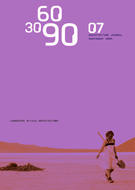
306090 07: Landscape within Architecture is intended as a foray into landscape architecture and a catalyst for exchange between students, faculty, and administrators interested in understanding and expanding the presence of landscape within the pedagogy and practice of architecture. This volume includes essays by Frederick Steiner, Alessandra Ponte, James Wines, Kimberly Hill, and others, as well as student projects by Kristin Akkerman Schuster, Elena Wiersma, and Hillary Sample.
Guest editor David L. Hays writes: “Collectively, the essays underscore four main lessons for architecture and landscape architecture. The first is that exposure to alternate theory and practice expands the way designers think about and beyond aspects of work already familiar to them. ... A second lesson is to embrace time in practical as well as philosophical terms. ... A third lesson is to get students out of the studio. ... Explorations of real space educate the body and mind in ways that cannot be achieved within the confines of the studio. ... A fourth lesson for both architecture and landscape architecture is to move beyond appropriation by engaging in real collaboration ... [H]ierarchical division of design professions that characterized professional culture in the last century should be a thing of the past.”